
Rolling Slots Casino Legitimacy 2026
Last updated: February 2026
Doubts first. Money second. That's the right order.
This legitimacy review looks at the key question Australians keep asking: is rolling slots legit or is it a "looks fine until something goes wrong" situation? The focus is on licensing, operator identity, security basics, fairness expectations, and the terms that usually trigger arguments. During the review window (January–February 2026), the site's public-facing licence claims, policy pages, and typical support/verification workflows were checked with an Australia-first lens (AUD users, local consumer caution, 18+ only).
Gambling can cause harm. If it stops being fun, it's time to pause.
Is Rolling Slots Legit in Australia?
Rolling Slots can appear legitimate on the surface. The platform presents itself as a real-money casino with a standard account system, published rules, and a stated licence framework. That matters. Still, Australians should treat it as an offshore operator and judge it on proof, not vibes. In plain terms, is rolling slots legit for Australians? It seems potentially legitimate, but with the usual offshore trade-offs: lighter regulation than Australian state-based frameworks, stricter promo terms than some players expect, and a higher chance that a verification step becomes the "gate" before any large payment is approved.
Quick checks that tend to support legitimacy include visible operator details, a stated Curaçao-style licensing position, and mainstream software provider branding (where present). On the risk side, Curaçao oversight is often viewed as less strict than regulators in places like the UK, Malta, or certain EU jurisdictions. And if a dispute happens, escalation options can feel limited.
A quick snapshot:
- Appears to operate as an offshore gaming site accepting international players, including some Australians.
- Presents licensing and operator details publicly (good sign, but it still needs confirmation).
- Standard KYC/AML checks are likely for many accounts, especially before larger cash-outs.
- Promo terms can create friction if a player misses a max bet rule.
Is it perfect? Not exactly.
Quick verdict (legit vs risky signals)
The most reasonable verdict: Rolling Slots looks legitimate enough to consider, but it's not "set and forget". Players should verify the licence claim, read the rules, and expect ID checks. The question is rolling slots legit doesn't have a one-line answer, but the trust signals are there—alongside the typical offshore risks.
Who it suits (and who should avoid it)
It tends to suit:
- Players comfortable with offshore licensing and reading terms before taking a bonus
- People happy to complete account verification early
- Slot-first users who care about software provider recognition
It's a poor fit for:
- Anyone wanting Australia-style regulatory protections
- Players who dislike document checks or slower back-and-forth with a verification department
- Those who often play quickly and might breach max bet limits by accident
License, Ownership and Regulation Checks
Licensing is the first "hard" legitimacy filter. And it's where many sites look fine until someone checks the details properly. Rolling Slots states it operates under a Curaçao framework, commonly referenced now as the Curaçao Gaming Control Board (GCB) style of licensing. That can be valid. But it must be verifiable, current, and tied to the correct operator entity.
For Australians, the key point is simple: a Curaçao licence is offshore. It doesn't equal Australian consumer protection. It also doesn't automatically mean a site is unsafe. It just means disputes and standards may be handled differently than players expect.
One thing to consider: some platforms display a licence seal while operating under a master/sub-licence arrangement. That's not automatically bad. It does mean players should confirm what's actually in force.
Curaçao Gaming Control Board (GCB) license status (what to verify)
Rolling Slots' legitimacy depends heavily on whether:
- The licence number (or reference) matches the operator shown on the site
- The licence status is active (not expired, suspended, or mismatched)
- The licensed activities cover the kind of games offered (casino products, live offerings, etc.)
If the licence details don't line up, that's a red flag. If they do, it's a positive signal—just not the same as Australian oversight.
Operator details: GBL Solutions N.V.
Rolling Slots is associated with GBL Solutions N.V. as the operator entity. That's a meaningful detail because it gives players a name to match against licensing records, terms and conditions, and policy pages. It also makes complaint documentation cleaner. Without a named operator, disputes get messy fast.
Interestingly, the operator name is one of the simplest credibility checks most players skip.
How to confirm license details (steps described briefly, no links section)
A practical way to validate legitimacy:
- Scroll to the footer and locate the licensing statement and operator name.
- Note the licence reference/number and the regulator name mentioned.
- Cross-check that the licence reference corresponds to the same operator (GBL Solutions N.V.).
- Confirm the licence status reads as active and covers online casino activity.
- Screenshot the details for records. Small step. Big payoff later.
Security, Fair Play and Account Verification
Security isn't exciting. It's also the part that matters most once money and identity documents are involved. Rolling Slots should meet baseline expectations in 2026: encrypted traffic, protected logins, and a clear privacy policy explaining how personal data is handled. If any of those are missing or vague, that would undermine the "is rolling slots legit" question quickly.
From what was observed during the review period, the platform presents a typical modern structure: account creation, policy pages, and standard prompts around responsible use. Still, players should assume that any offshore casino will require more personal proof at some point—especially if behaviour triggers risk checks (large wins, bonus play, sudden changes in payment method, or multiple accounts on one IP).
Short version: expect checks. And plan for them.
SSL encryption and data handling expectations
A legitimate platform should:
- Use HTTPS across login and cashier areas
- Store passwords securely (hashed, not visible to support)
- Explain data retention and sharing in a privacy notice
- Offer basic security steps like session timeouts and device monitoring
Typically, Australians should also avoid shared devices and public Wi‑Fi for any gambling account. It's simple, but it prevents dumb problems.
RNG/fairness: what "tested games" should mean in 2026
Most online slots and table titles rely on an RNG (random number generator). In 2026, "tested" should mean more than a badge. It should refer to independent labs such as iTech Labs, eCOGRA, GLI, or similar bodies that audit RNG behaviour and sometimes game math.
To be honest, the average player won't read audit reports. That said, legitimacy improves when:
- Recognised providers supply the games (they protect their own reputations)
- RTP (return to player) is displayed clearly in-game or in the info panel
- Game rules are easy to find and not hidden behind vague menus
KYC/AML: documents commonly requested and why delays happen
KYC/AML checks are normal. They're also the #1 source of frustration.
Commonly requested documents:
- Photo ID (passport or driver licence)
- Proof of address (utility bill or bank statement, usually recent)
- Payment method proof (card photo with digits hidden, or e-wallet screenshot)
- Sometimes a selfie or "liveness" check
Delays usually happen when photos are unclear, documents are expired, names don't match the account, or a player changes payment methods mid-way. And yes, bonus play can increase scrutiny.
Reputation, Complaints and Player Support Quality
Reputation is messy because it's built from individual outcomes. Some players have a smooth run. Others hit a wall—often around terms or document checks. Rolling Slots sits in that familiar zone: it may run fine for many users, yet complaints tend to cluster around a few recurring themes. That pattern matters more than one angry post or one glowing comment.
In fairness, many disputes across the industry come down to misunderstandings. A player takes a bonus, plays excluded games, places bets above a stated cap, or misses a time limit. Then support says no. Players feel robbed. Support says "terms". That cycle isn't unique to rolling slots, but it's relevant to the question is rolling slots legit because legitimate sites still enforce their rules—sometimes harshly.
Common complaint themes (delays, verification loops, terms disputes)
The most common themes seen across offshore casinos tend to be:
- "Verification loop" feelings: more documents requested after the first batch
- Waiting time complaints during peak periods
- Disagreements about wagering, max bet rules, or excluded titles
- Confusion around account restrictions triggered by AML controls
One thing to consider: a vague complaint without screenshots or timestamps is hard to assess. Evidence changes the story.
Support availability: live chat/email/FAQ and response expectations
Rolling Slots typically promotes standard support channels such as live chat and email, plus an FAQ area. Response time claims vary across the industry, so it's safer to use a realistic expectation: replies can range from minutes to a few hours, and complicated cases may take longer because the verification department reviews them.
Fast chat is nice. Accurate answers are better. Players should save transcripts either way.
Dispute readiness: what evidence players should keep
If a dispute happens, players should keep:
- Screenshots of promo terms at the time of claiming
- Wagering progress screens (if shown)
- Game history and bet sizes
- All email threads and chat transcripts
- Proof of identity submissions and timestamps
It sounds paranoid. It's just practical.
Bonuses and Terms That Affect Legitimacy
Promotions can make a casino look friendly. They can also cause most of the conflict. For legitimacy, the question isn't "how big is the offer?" It's "are the rules readable, consistent, and enforced in a predictable way?"
Rolling Slots commonly uses familiar promo structures: a first-time match offer, ongoing reload-style deals, and sometimes free spins tied to selected slots. Exact availability can change by region and time, so the safest approach is to treat any headline offer as provisional until the terms page confirms it.
A player should pay close attention to wagering, maximum bet limits, time windows, and excluded games. Those details often decide whether a win is paid as expected or reviewed.
And yes, some promos in the market still sit around 40x–45x wagering. That's high. It doesn't mean scam. It does mean effort.
Welcome offer types (deposit bonus + free spins if available)
Common offer shapes players may see include:
- Percentage match credits on a first payment
- Bundled packages across the first few payments
- Free spins on selected slot titles (often with a win cap)
- Cashback-style promos on certain days (terms usually apply)
Promos can be worth it. But only if a player intends to meet the playthrough.
Wagering rules: example calculation and typical caps
A simple example helps.
If a player receives a $200 bonus with 45x wagering on the bonus amount, the required wagering is:
- $200 × 45 = $9,000 in eligible bets
If the wagering applies to bonus + cash, the number jumps. That's why the fine print matters.
Also, many casinos apply contribution rules: some table games contribute 10% or 0% toward wagering, while most slot play counts 100%. In 2026, this should be clearly stated. If it's not, that's a legitimacy concern.
Max bet, time limits, excluded games—what to watch
Three common "gotchas":
- Max bet limits while a bonus is active (e.g., $5 per spin)
- Time limits (often 7–30 days) before the bonus and winnings expire
- Excluded games (some providers/titles don't count, or count partially)
These aren't rare rules. But they must be clear and consistently enforced.
| Offer | Match/FS | Wagering | Time limit | Max bet | Key exclusions |
|---|---|---|---|---|---|
| First-time promo (example) | Up to 100% match | 40x–45x (varies) | 7–30 days | Often $5–$10 | Some table games may contribute low/0% |
| Free spins add-on (example) | 20–100 FS | 30x–45x on wins | 7–14 days | Fixed spin value | Only selected slots; win caps may apply |
| Reload/cashback (example) | % back or match | 30x–45x | 3–14 days | Often $5–$10 | Eligible games/providers list applies |
Game Collection and Software Providers (Trust Signals)

Game variety isn't just entertainment. It's also a trust signal. Offshore casinos that partner with known software studios tend to have clearer maths, more consistent RTP disclosures, and fewer "mystery" titles that no one can verify. That doesn't guarantee a perfect experience, but it shifts the odds toward legitimacy.
Rolling Slots presents itself as a slots-led platform with additional table and live options. Exact counts change, and lobbies get reshuffled. During the review window, the layout and filtering appeared consistent with a multi-provider library rather than a single in-house set. That's usually a better sign.
Still, players should do a small test: open a few games and check for an info button showing RTP and rules. If that information is missing across the board, that would be concerning.
Short check. Big clue.
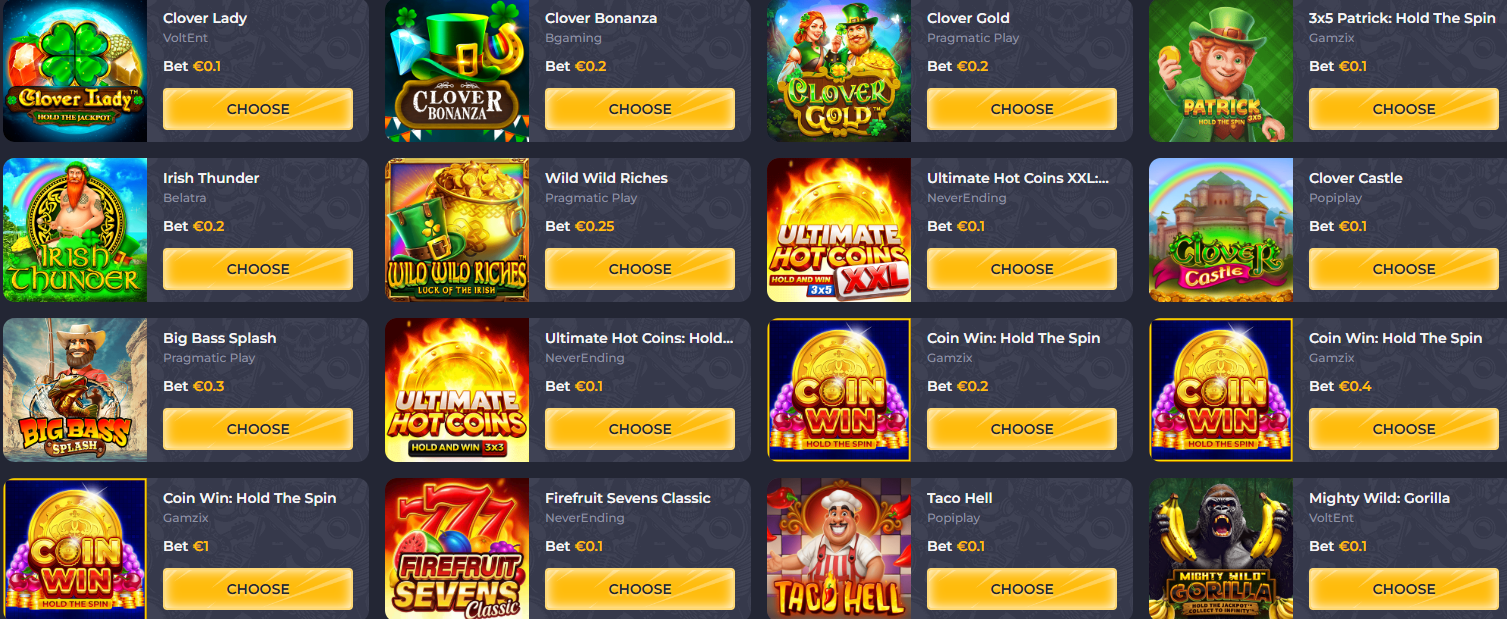
Game categories and estimated depth (slots, live, table, jackpots)
Realistic category ranges for a modern offshore casino of this type:
- Slots: roughly 2,000–5,000 titles (mix of classics, megaways-style, buy-feature variants)
- Table games: roughly 50–200 (blackjack, roulette, baccarat variants)
- Live casino: roughly 100–500 tables (depending on studios and languages)
- Jackpots: a smaller subset, often 20–200 titles (network and local jackpots)
- Other games: scratch cards, instant win, or crash-style games may appear
Numbers shift. Providers rotate. That's normal.
Provider recognition as a legitimacy cue
Provider visibility matters because known studios have reputations to protect and usually publish RTP bands. Recognised names also make dispute analysis easier: a player can identify the game build, rules, and expected volatility.
Legitimacy tends to look stronger when:
- Provider logos are clearly displayed
- Game titles open in stable clients (not broken web wrappers)
- Game rules are readable and match the provider's standard format
If a lobby is packed with unrecognised clones, that's the opposite signal.
RTP visibility and game rule transparency
RTP doesn't predict short-term results. It does show the long-run expected return.
In 2026, players should expect:
- RTP shown in the game info panel (often 94%–97% for slots, depending on title)
- Paytables and feature rules available before play
- Clear notes on bonus-buy costs, if relevant
Responsible gambling matters too. High-volatility slots can burn through bankroll quickly, even with a decent RTP. That's maths, not mood.
Payments (Methods, Limits, Timing)
Payments are where legitimacy becomes real. Players don't remember the lobby design; they remember whether money arrives and whether the process feels fair. Rolling Slots appears to support a mix of traditional and modern options that Australians commonly look for, including cards and crypto. Availability can vary based on region and compliance rules.
One thing to consider: offshore casinos often apply extra checks when a player changes their payment method, uses a different name, or triggers an AML review. That's not automatically a bad sign. It's a friction point.
And yes—fees can exist. Sometimes it's the payment processor, sometimes the casino, sometimes the bank. Players should read the cashier notes carefully before confirming.
Available payment methods
Common method types players may see include:
- Visa / Mastercard
- Bank transfer (where offered)
- E-wallets (availability varies by region)
- Prepaid voucher options (in some markets)
- Cryptocurrencies (e.g., Bitcoin, Ethereum, Litecoin, USDT)
Limits, processing times, and fee notes
Typical expectations in 2026 (varies by method and verification status):
| Method | Min | Max | Typical processing time | Fees note |
|---|---|---|---|---|
| Cards (Visa/Mastercard) | ~$10–$20 | Mid-range caps | Hours to 1–3 days | Bank/processor fees may apply |
| Bank transfer | ~$20–$50 | Higher caps | 2–5 business days | Bank fees possible |
| E-wallets | ~$10–$20 | Mid/high caps | Minutes to 24 hours | Usually low, sometimes none |
| Crypto | ~$20 | Higher caps | Minutes to 24 hours | Network fees apply; rates fluctuate |
AUD handling is another practical point. Some offshore sites process in other currencies and convert. That's normal, but it can add spread costs.
Pros and Cons
A legitimacy check shouldn't read like marketing. So, balance matters.
Pros
- Licence and operator details are presented publicly, including GBL Solutions N.V.
- The site positions itself under a Curaçao GCB licensing framework (players can verify the status)
- Multi-provider game sourcing appears likely, which can support RNG trust and clearer rules
- Standard security expectations (HTTPS/SSL) are typically present on modern account and payment pages
- KYC/AML verification steps are part of the process, which can reduce fraud and chargeback abuse
- Live chat and email-style support options are commonly offered, plus an FAQ for basic issues
Cons
- Curaçao licensing is often seen as lighter than stricter regulators, which may concern Australian players
- Some promo wagering can sit around 40x–45x, above what many consider "easy value"
- Max bet limits and excluded games during bonus play can cause disputes if a player misses a rule
- Verification reviews can extend timelines, especially if documents don't match perfectly or payment methods change
FAQ
Rolling Slots appears legitimate based on visible operator identification, stated licensing, and standard casino site structure. That said, it's an offshore platform, so Australians should treat it as higher-risk than locally regulated options. The safest approach is to verify the licence details and complete account checks early.
The site presents itself under a Curaçao Gaming Control Board (GCB) style licensing framework. Players should confirm the licence reference and ensure it matches the operator name shown in the footer and terms pages. A valid, active status is the key detail.
Rolling Slots is associated with the operator GBL Solutions N.V. This matters because it provides a responsible entity for terms enforcement and dispute documentation. Players should ensure the operator name is consistent across policy pages.
In most cases, yes—especially for larger amounts or when bonus play is involved. Standard verification is part of KYC/AML controls and can include ID, address proof, and payment method confirmation. Completing it early can prevent last-minute delays.
Fairness usually depends on software providers and whether games are independently tested by recognised labs (for example, iTech Labs, eCOGRA, or GLI). Players should look for RTP and rules inside each game's info panel. Recognised providers are generally a better trust signal than unknown "house" titles.
The most common trouble spots are high wagering (sometimes 40x–45x), max bet limits while a bonus is active, short time limits, and excluded games that don't count toward playthrough. Players should also watch for win caps on free spins. Reading the terms before activating a promo prevents most disputes.
Use clear photos, matching names, and current documents. Avoid changing payment methods mid-process, and keep all correspondence with the verification department in one email thread. Saving screenshots of submissions and timestamps helps if support needs to re-check anything.
Rolling Slots typically provides live chat, email support, and an FAQ section. Response times can vary from minutes to several hours depending on traffic and issue type. For disputes, players should keep chat transcripts and written replies.
Conclusion
So, is rolling slots legit for Australians? It appears to be a legitimate offshore casino operation, with an identified operator (GBL Solutions N.V.) and a stated Curaçao GCB licensing position that players can and should verify. The main risks aren't unusual for this segment: lighter regulation than stricter jurisdictions, promo terms that can be unforgiving, and verification steps that may slow things down.
Players who value clear rules, keep records, and follow bonus limits will likely have fewer problems. Anyone wanting stronger regulatory comfort may prefer alternatives. Gamble responsibly, 18+ only.